
Hubs

The Impact of Global Health R&D Hub

Is this the world's best investment? The success of global health R&D over the past 20 years is a resounding one - and yet R&D funding to tackle neglected diseases has fallen since the pandemic. In breakthrough work, we find a staggering return on that investment in terms of societal benefit.

mother kissing a baby in an illustration

Hub Editors

Céline Aerts

Dr Céline Aerts

Senior Analyst

making an impact
Global health is the world's best investment

In breakthrough work, we analyse the impact of global health R&D, showing the return on investment in health and economic terms for the first time. We look at the products which have been gamechangers over the last two decades and model the future returns of health innovations which transform the health and economic outlook for vulnerable populations.

PDF of the global report

Interactive report findings

Video of the report launch

$405
returned in societal value for every $1 invested

30%
drop in deaths from poverty-related diseases in last 20 years

The Ripple Effect 3.0: deepening the case for the domestic benefits of global health

The Ripple Effect 3.0 highlights findings from five new case studies: Arexvy (an RSV vaccine powered by the AS01 malaria-derived adjuvant), DFMO (a sleeping sickness drug repurposed to treat paediatric neuroblastoma), the single-dose HPV vaccine schedule (adopted by HICs based on evidence generated in LMICs), Rotarix (a rotavirus vaccine developed with a South-first strategy), and M72/AS01E (a promising new tuberculosis vaccine candidate). The brief provides quantitative, country-specific evidence of how these global health innovations improve health outcomes and deliver economic value across the US, UK, Japan and Europe.

Ripple effect 3.0 image

The Ripple Effect 3.0: deepening the case for the domestic benefits of global health R&D

Five new case studies, providing quantitative, country-specific proof points showing how these selected global health innovations improve health outcomes and deliver health system...
Read more

AS01 adjuvant in Arexvy: from malaria research to protecting ageing populations

The AS01 adjuvant was initially advanced through the RTS,S malaria vaccine research programme, before being adopted to enhance the effectiveness of GSK’s ‘Arexvy’ respiratory...
Read more

DFMO: from sleeping sickness to treating children’s cancer

DFMO was briefly conceived as a cancer treatment, but, after failing initial trials, it was successfully developed as a treatment for sleeping sickness in Africa, before being...
Read more
Ripple effect 3.0 image

From a multi-dose schedule to a single dose: how LMIC research can unlock the full potential of HPV vaccination

The human papillomavirus (HPV) vaccine moved from a two-dose schedule to a single dose for eligible individuals in the primary target group- girls aged 9-14 years. This change was...
Read more

Rotarix: preventing diarrhoeal disease across the globe

The Rotarix rotavirus vaccine was developed by GSK following the side effects-driven withdrawal of the earlier RotaShield vaccine. GSK deliberately adopted a ‘South-first’ access...
Read more

AS01 adjuvant in M72 vaccine: from malaria research to tackling tuberculosis

The AS01 adjuvant, initially advanced through GSK and PATH’s RTS,S malaria vaccine global health research programme, before being adopted across a range of diseases and vaccines...
Read more

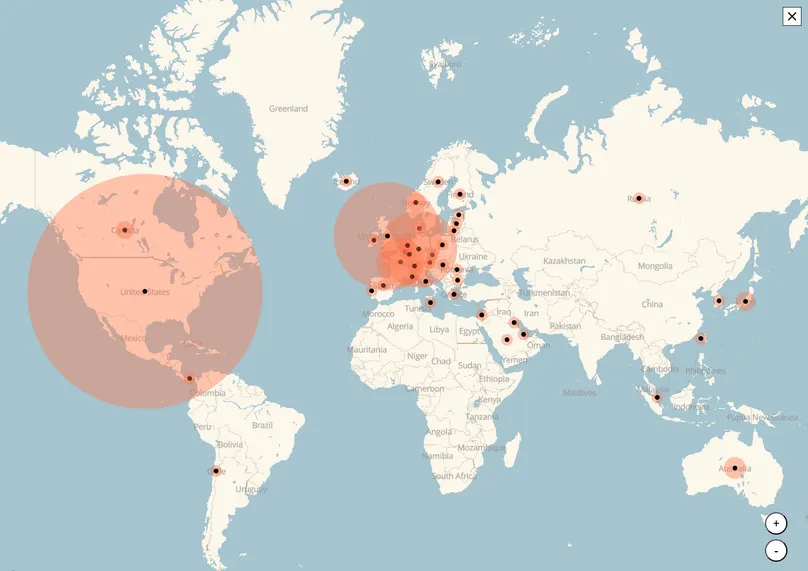
Interactive map

High-income countries benefit from global health R&D

Explore our interactive map to see how investments in global health R&D deliver domestic benefits and cost savings to high-income countries

Image of interactive map for Ripple reports

All resources in this hub

Ripple effect 3.0 image

10 min read

AS01 adjuvant in M72 vaccine: from malaria research to tackling tuberculosis

The AS01 adjuvant, initially advanced through GSK and PATH’s RTS,S malaria vaccine global health research programme, before being adopted across a range of diseases and vaccines candidates, including to enhance the effectiveness of the M72/AS01E candidate vaccine for tuberculosis (TB).

Harriet BellImpact Global Health 18 June 2026
Ripple effect 3.0 image

10 min read

Rotarix: preventing diarrhoeal disease across the globe

The Rotarix rotavirus vaccine was developed by GSK following the side effects-driven withdrawal of the earlier RotaShield vaccine. GSK deliberately adopted a ‘South-first’ access strategy for Rotarix, using trials and distribution in Latin America to build the evidence base that led to its widespread adoption throughout the rich world.

Harriet BellImpact Global Health 18 June 2026
Ripple effect 3.0 image

10 min read

From a multi-dose schedule to a single dose: how LMIC research can unlock the full potential of HPV vaccination

The human papillomavirus (HPV) vaccine moved from a two-dose schedule to a single dose for eligible individuals in the primary target group- girls aged 9-14 years. This change was based on innovative research from LMICs that is now being adopted in the UK and has huge potential for scale up across LMICs and HICs alike.  

Harriet BellImpact Global Health 18 June 2026
Ripple effect 3.0 image

10 min read

DFMO: from sleeping sickness to treating children’s cancer

DFMO was briefly conceived as a cancer treatment, but, after failing initial trials, it was successfully developed as a treatment for sleeping sickness in Africa, before being repurposed as a cream for unwanted facial hair and finally coming full circle as an FDA-approved treatment for paediatric neuroblastoma.

Harriet BellImpact Global Health 18 June 2026
Ripple effect 3.0 image

10 min read

AS01 adjuvant in Arexvy: from malaria research to protecting ageing populations

The AS01 adjuvant was initially advanced through the RTS,S malaria vaccine research programme, before being adopted to enhance the effectiveness of GSK’s ‘Arexvy’ respiratory syncytial virus (RSV) vaccine in older people.

Harriet BellImpact Global Health 18 June 2026
Ripple effect 3.0 image

10 min read

The Ripple Effect 3.0: deepening the case for the domestic benefits of global health

Five new case studies, providing quantitative, country-specific proof points showing how these selected global health innovations improve health outcomes and deliver health system cost savings in the UK, US, Japan and Europe.

Harriet BellImpact Global Health 18 June 2026
Ripple effect 3.0 image

2 min read

The Ripple Effect 3.0

The third iteration of Impact Global Health's 'ripple effect' research provides five new case studies to deepen the evidence base for the domestic benefits of global health R&D.

Harriet BellImpact Global Health 18 June 2026
Ripple effect 3.0 image

5 min read

The Ripple Effect 2.0: video

Key messages from The Ripple Effect 2.0 which provides quantitative, country-specific proof points showing how innovations originally developed to address health needs in low- and middle-income countries (LMICs) are now improving health outcomes and delivering economic value across the United States, United Kingdom, Japan, and Europe.

Harriet BellImpact Global Health 20 Jan 2026
Ripple effect 3.0 image

10 min read

Why global health R&D is one of the smartest investments governments can make

Céline Aerts uncovers the wide range of spillover effects that global health R&D produces in high-income countries.

Céline AertsDr Céline Aerts20 Jan 2026
...

You may also be interested in

people walking around

BROWSE OUR

Report Library

Browse our full archive of reports. Filter by health area, disease or condition, product, and date. Written by our expert analysts, our reports highlight key messages in the data, make the case for change and offer actionable recommendations.

Learn more
a little boy got band aid by a doctor and his mother behind him

BROWSE BY

Disease and condition

Our Health Areas resource gives you an at-a-glance summary of the state of innovation and annual R&D investment by disease and condition. Updated regularly, this is a unique quick reference for the global health community.

Learn more